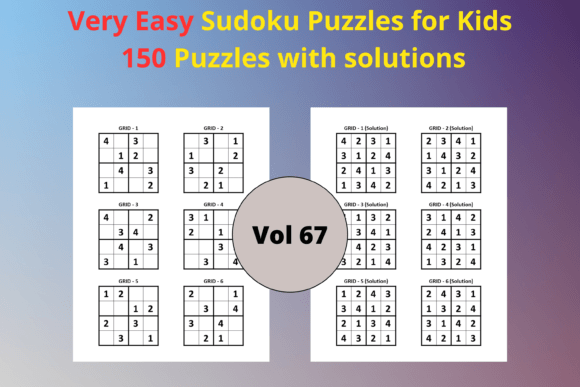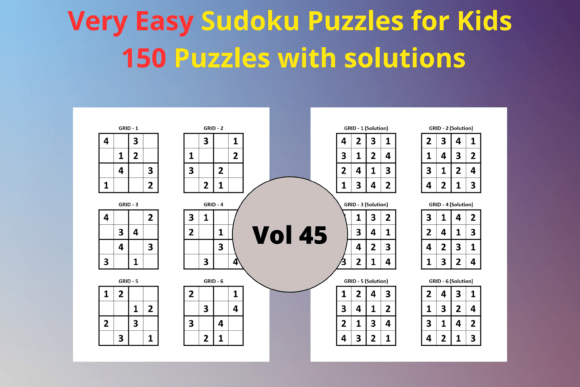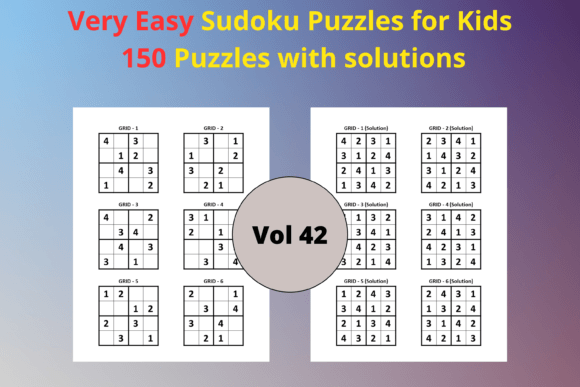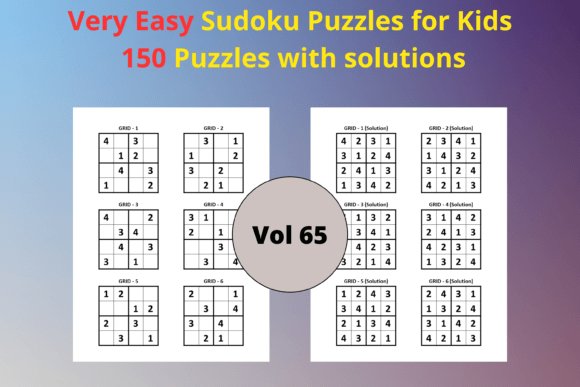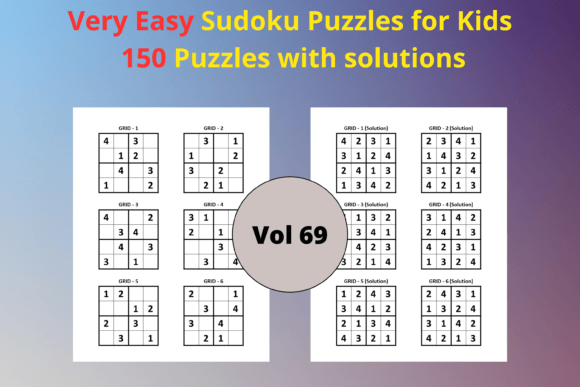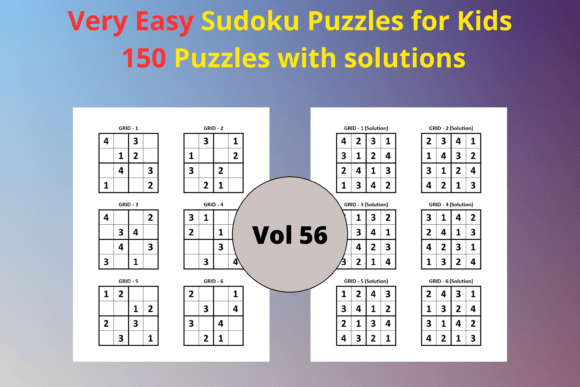
Very Easy Sudoku Puzzles for Kids: A Fun Gateway to Logical Thinking
In the landscape of children's educational activities, puzzles hold a special place. They are more than just games; they are tools that quietly build foundational cognitive skills. Among these, Sudoku has emerged as a globally popular logic puzzle. However, the standard 9x9 grid can be intimidating for young minds. This is where Very Easy Sudoku for Kids, specifically designed on a simple 4x4 grid, becomes a powerful and engaging resource. A dedicated collection, such as a pack featuring 150 different puzzles with solutions, offers a substantial and structured path for children to develop critical thinking, patience, and numerical confidence from the ground up.
What is Very Easy Sudoku for Kids?
Sudoku is a number-placement puzzle. The classic version uses a 9x9 grid subdivided into smaller 3x3 regions. For children, especially those in early learning stages, a 4x4 grid provides a perfect entry point. This simplified version reduces complexity while preserving the core logic of the game. The puzzle starts with some numbers already filled in (the "givens"). The child's task is to fill the empty cells so that each row, each column, and often each smaller 2x2 block contains the numbers 1 through 4 exactly once. The "Very Easy" designation ensures these puzzles are solvable with basic deduction, eliminating frustration and fostering a sense of accomplishment.
The practical relevance of such a puzzle pack is immense. It translates a sophisticated logic exercise into a child-friendly format. A collection of 150 puzzles with 150 solutions provides not just variety but progressive, self-guided practice. With both a ready-to-use PDF and an editable PPTX file, it serves as a versatile resource for parents, teachers, and caregivers, seamlessly fitting into home learning, classroom activities, or travel entertainment.
The Purpose and Significance in Child Development
The primary purpose of Very Easy Sudoku for kids is not merely to fill grids. It is to cultivate logical reasoning in a playful, non-threatening environment. As children engage with these puzzles, they unconsciously practice several key skills:
- Pattern Recognition: They learn to scan rows and columns to identify missing numbers.
- Deductive Reasoning: They move from guessing to systematic thinking, asking, "If this number is here, it cannot be there."
- Concentration and Focus: Completing a puzzle requires sustained attention, a skill valuable across all academic subjects.
- Number Familiarity: It reinforces recognition of digits 1-4 without the pressure of arithmetic, building comfort with numerical symbols.
Its significance lies in being a stealth educational tool. Unlike overt math drills, Sudoku feels like a game. This increases motivation and engagement, turning learning into an enjoyable challenge. In modern education, where developing problem-solving abilities is paramount, such resources bridge the gap between play and cognitive development.
Common Misunderstandings About Sudoku for Kids
Some might assume Sudoku is purely a "math game." This is a common misunderstanding. While it uses numbers, the core challenge is logic, not calculation. It's about placement and rules, similar to a strategy board game. Another assumption is that puzzles are only for "smart" kids. The "Very Easy" level specifically dismantles this notion. It is designed for beginners, making it inclusive and confidence-building. Every child can start at this level and experience success.
How It Fits Into Modern Life and Education
In today's fast-paced, digital world, activities that promote slow, focused thinking are invaluable. Very Easy Sudoku for Kids offers a screen-free alternative that stimulates the mind. It fits effortlessly into daily routines:
- At Home: As a morning warm-up, a quiet afternoon activity, or a family puzzle session.
- In the Classroom: Teachers can use individual puzzles as bell-ringers, group them into math center activities, or incorporate them into logic units. The editable PPTX file allows for easy customization and integration into lesson plans.
- During Travel: The printable PDF format makes it a perfect companion for car rides or flights, promoting engagement without electronics.
In the context of business, such a professionally prepared puzzle pack (formatted for KDP Interiors at 8.5 x 11 inches) represents a ready-made product for educators and parents looking for quality content. It meets a clear market need for educational printables that are both fun and substantive.
Examples and Practical Application
Imagine a child, perhaps 5 or 6 years old, encountering their first 4x4 Sudoku grid. A sample "Very Easy" puzzle might have six numbers pre-filled. The child looks at a row with numbers 1, 2, and 4 already present. Through gentle guidance, they realize the missing number must be 3. They fill it in. This simple act is a victory of logic. They then apply the same logic to a column. With 150 different puzzles, the scenarios gradually vary, ensuring the child internalizes the rule set without memorizing specific solutions.
The inclusion of 150 separate solutions is crucial. It allows for independent learning. A child can attempt a puzzle, and then, if needed, check the solution to understand the path to the correct answer. This self-checking mechanism builds autonomy and analytical skills—they can compare their attempt to the solution and see where their reasoning diverged.
Building a Broader Understanding of Logic and Problem-Solving
Engaging regularly with these puzzles helps children build a broader framework for problem-solving. They learn a universal approach: analyze the given information, identify constraints (the rules of rows and columns), and methodically test possibilities. This mindset transfers to other domains: solving a conflict with friends by understanding "rules" of fairness, assembling a toy by following sequential steps, or even later tackling complex math and science problems. Very Easy Sudoku lays the groundwork for seeing challenges as systems to be decoded.
The Role of Technology and Creativity
While the puzzle itself is analog, its preparation and distribution are enhanced by technology. The provision of both a PDF and PPTX file speaks to modern needs. The PDF ensures flawless, ready-to-upload printing for instant use. The PPTX editable file unlocks creativity—a teacher can add a child's name to the worksheet, combine puzzles into a custom packet, or even adjust the design for specific events. This blend of traditional puzzle-solving with digital flexibility makes the resource highly adaptable and relevant.
Furthermore, completing these puzzles can spark creativity in an unexpected way. The logical process "cleans" the mental workspace, which can free the mind for creative thinking afterward. It’s a structured task that, upon completion, provides a sense of order and readiness for more imaginative play.
Conclusion: A Foundational Tool for Growing Minds
A pack of 150 Very Easy Sudoku Puzzles for Kids with solutions is far more than a collection of grids. It is a structured journey into the world of logical thought. Designed with the beginner in mind using the 4x4 format, it removes barriers to entry and replaces them with stepping stones of achievement. Its design as a KDP Interior, with professional formatting and editable files, ensures it is a practical, high-quality resource for anyone involved in a child's education. By integrating such activities into daily life, we offer children not just a fun puzzle, but a foundational skill set—the ability to think clearly, systematically, and confidently—that will support them in every aspect of their future learning and life.