Choosing the Right Learning Tool: Evaluating Very Easy Sudoku for Kids 104
When selecting educational materials for young children, the goal is often to find resources that are engaging, appropriately challenging, and easy to integrate into daily routines. For parents, educators, and caregivers looking to introduce logical thinking and pattern recognition, Sudoku puzzles are a frequent consideration. Among the many available options, a product like Very Easy Sudoku for Kids 104 represents a specific approach, one that merits a detailed evaluation against the broader landscape of early learning puzzles.
The Defining Features of Very Easy Sudoku for Kids 104
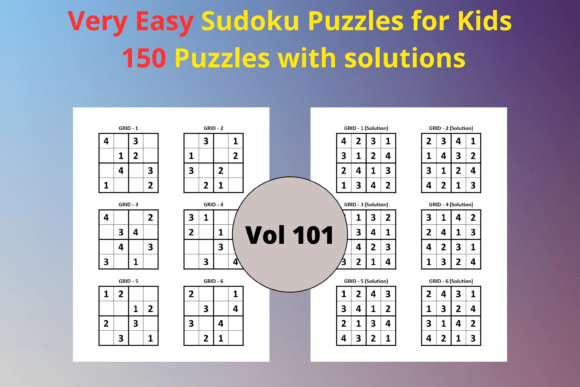
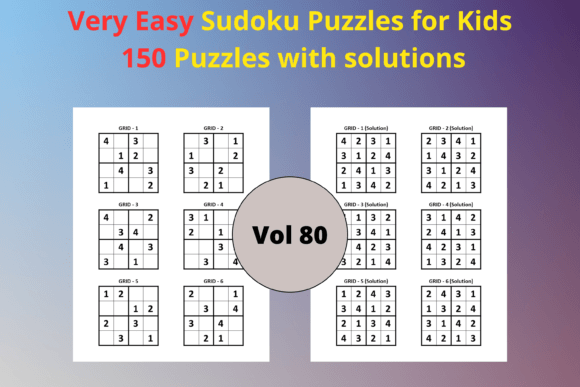
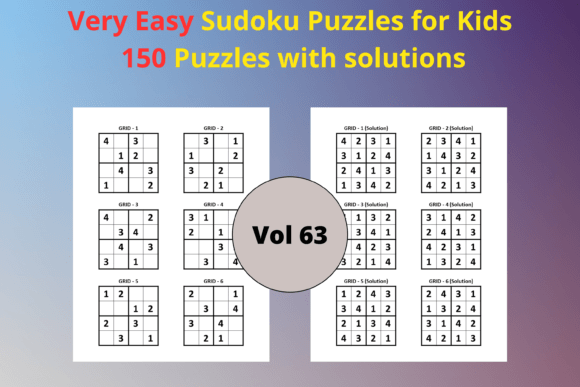
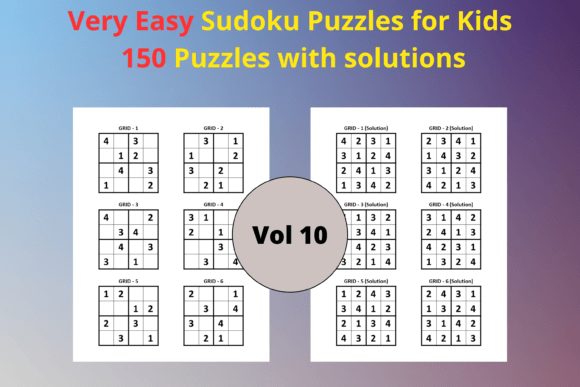
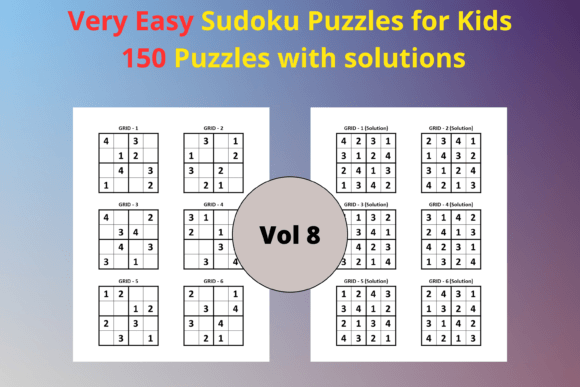
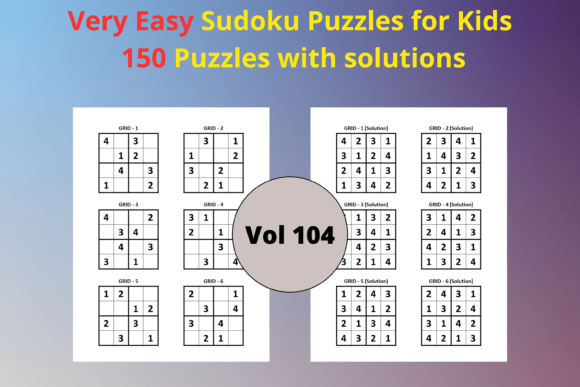
Very Easy Sudoku for Kids 104 is not merely a book of puzzles; it is a packaged resource designed for specific practical use. Its core offering is a collection of 150 distinct 4x4 grid puzzles, all categorized at a "Very Easy" difficulty level. Each puzzle is paired with a solution, making the pack a self-contained tool. The format is prepared as KDP (Kindle Direct Publishing) interiors, meaning it is structured for straightforward digital publishing. The inclusion of both a finalized PDF file and an editable PPTX file is a significant feature, distinguishing it from static, print-only books. The physical dimensions are standardized at 8.5 x 11 inches, a common size for workbooks and printable sheets.
The primary distinction of this pack lies in its combination of volume, consistency, and flexibility. The 150 puzzles provide substantial material without repetition, which is a key consideration for maintaining a child's interest over time. The "Very Easy" designation for 4x4 grids is crucial; it targets the absolute beginner, often a child aged 4 to 7, who is encountering the concept of Sudoku for the first time. The puzzles avoid the complexity of 6x6 or 9x9 grids, focusing solely on building foundational confidence.
Comparing Formats and Delivery Methods
When evaluating such a product, it is useful to compare its format against other common delivery methods for children's puzzles. Traditional published workbooks are a direct alternative. These offer a curated sequence of puzzles in a bound format, often with progressing difficulty. A workbook's strength is its tactile, ready-to-use nature; you simply open it and begin. However, its limitation is inflexibility. You cannot easily extract individual pages for specific lessons or print multiple copies for a classroom.
Very Easy Sudoku for Kids 104, by providing editable source files, operates in a different category. It is a digital asset. The PDF is ready for upload to print-on-demand services or for immediate home printing. The PPTX file allows for customization—a teacher can add instructions, change fonts, or combine puzzles with other materials. This format is best-fit for situations requiring adaptability: homeschooling parents creating tailored lesson plans, activity coordinators needing bulk copies for events, or content creators looking to incorporate puzzles into larger projects. The tradeoff is the need for basic digital handling; it requires a user to manage files and printing, which a pre-printed workbook does not.
Volume and Difficulty as Decision Factors
The quantity of puzzles, 150, is another point for comparison. Smaller puzzle books might offer 50 or 100 puzzles. A larger volume like this reduces the frequency of needing to find a new resource, which can be a practical advantage for long-term engagement. However, the critical factor is the consistency of difficulty. Some mixed-level books start with "easy" puzzles but quickly advance. This pack maintains a uniform "Very Easy" level throughout. For a child who needs prolonged practice at the foundational stage, this is a benefit. For a child who rapidly grasps the concept and seeks progression, this single-level focus could become a limitation. In that case, a product with a built-in gradient of difficulty, moving from 4x4 to 6x6 grids, might be a more suitable alternative.
Practical Applications and Best-Fit Situations
The utility of Very Easy Sudoku for Kids 104 becomes clear in specific scenarios. Its design is highly conducive to structured learning environments where repetition and practice are valued. For instance, a kindergarten teacher introducing logic games might use a printable puzzle each day as a morning activity. The editable file allows for placing the child's name or a date on the sheet. Similarly, a parent following a methodical home-learning schedule could print a week's worth of puzzles at once, knowing each one is calibrated to the same accessible level.
Another strong application is in creating bundled activity packs. Because the files are editable and ready for KDP, they can be seamlessly combined with other materials—like coloring pages or simple math exercises—to create a comprehensive digital activity book. This makes the resource attractive not only to end-users but also to other creators looking for reliable, royalty-free interiors to augment their own projects. In contrast, a fixed-format workbook cannot be disaggregated or remixed in this way.
When Another Option Might Be Preferable
While Very Easy Sudoku for Kids 104 has clear strengths, it is not the universal solution for every need. Its very specific focus means it may not fit situations requiring variety or immediate, no-prep engagement. For example, a parent looking for a single, carry-along activity book for travel might prefer a professionally printed, mixed-activity book containing Sudoku alongside mazes and word searches. The ready-to-upload PDF requires access to printing, which isn't always convenient.
Furthermore, if the goal is to assess a child's aptitude and quickly challenge them, a product that includes a range of difficulties within the same volume might offer more exploratory value. The uniform level here provides deep practice but not natural progression. Therefore, if you are uncertain about the child's starting level or expect rapid advancement, you might consider resources that offer a sampler of different grid sizes and difficulties. The decision hinges on whether you prioritize depth and repetition at one stage or breadth and progression across stages.
Evaluating the Complete Package: Files and Flexibility
A holistic view of this product involves examining all components together. The inclusion of both PDF and PPTX files addresses different user needs simultaneously. The PDF ensures fidelity and ease of distribution; it’s the final product. The PPTX file empowers modification. This dual offering is less common in the marketplace, where many digital puzzles are sold as locked PDFs only. The flexibility to alter aspects like layout or add instructional text can be significant for specialized use cases, such as creating materials for children with specific learning needs where larger fonts or simplified directions are helpful.
The tradeoff, again, is in complexity. Managing two file types and potentially editing a presentation file requires more technical confidence than simply opening a book. For users who value a turnkey solution—a book they can buy and give directly to a child—the editable aspect might be superfluous. For those who integrate resources into larger systems or customize learning tools, this feature is a substantial advantage. It transforms the product from a static puzzle collection into a versatile content block.
Ultimately, the choice between Very Easy Sudoku for Kids 104 and other alternatives rests on a clear assessment of your primary requirements. If your situation calls for a large volume of consistently beginner-level puzzles, with the option for digital printing and customization, this pack aligns well with those needs. Its design supports methodical, repeated practice and creator flexibility. If, however, your needs lean toward immediate physical use, a variety of puzzle types and difficulties, or a more exploratory learning path, then comparing other styles and formats of children's puzzle books would be a prudent next step. By understanding the distinct composition and intended applications of this resource, you can make a more informed decision that matches the specific educational context you are aiming to support.