The Design and Utility of Professional Medication Tracking Sheets
Managing medications and supplements is a routine yet critical task for millions of individuals, ranging from patients managing chronic conditions to caregivers overseeing complex regimens. In this landscape, the physical documentation tool—the medication tracker—becomes an essential interface between health instructions and daily practice. The evolution of printable, at-home logs represents a significant shift towards personalized, accessible health management. When these tools are crafted specifically for platforms like Amazon Kindle Direct Publishing (KDP), as with a Medication Tracker Kdp Interior, they merge practical health utility with the technical demands of self-publishing, creating a product that serves both end-users and creators.
Understanding the Core Components of a Tracking Sheet
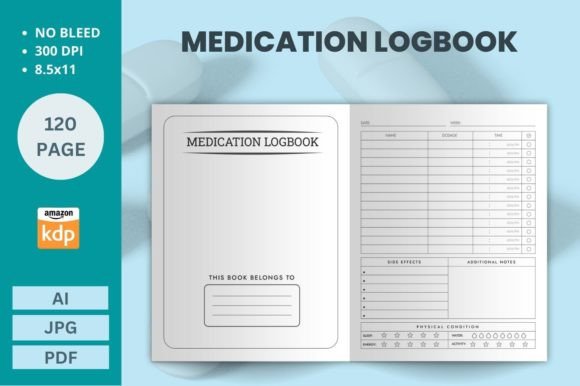
A well-designed medication tracking sheet is more than a simple grid. It is a structured document intended to capture nuanced information reliably. Typically, it includes fields for medication name, dosage, frequency, time of administration, and start/end dates. Advanced sheets might incorporate sections for noting side effects, prescriber information, pharmacy details, and supplement intake alongside prescriptions. The physical layout must balance clarity with comprehensiveness; too sparse a design risks missing critical data, while an overly complex one can become intimidating or impractical for daily use. The goal is to create a logical flow that guides the user through their day or week, reducing cognitive load and the potential for error.
The Shift to Printable and Digital-Ready Formats
The rise of print-at-home medication logs and monthly medication tracker printable files speaks to a demand for immediacy and customization. Users can obtain a tailored tool instantly, print only the pages they need, and integrate them into existing binders or health journals. This format also empowers creators, particularly in the self-publishing space. A professionally designed medicine and supplement tracking sheet packaged as a digital product—containing files like PDFs, JPGs, and AI source files—becomes a versatile asset. It can be sold directly to consumers seeking organizers, or to other entrepreneurs looking for ready-made interiors for their own KDP publications.
The KDP Interior as a Specialized Product Category
Amazon's KDP platform has opened avenues for low-content books, such as planners, journals, and trackers. Here, the interior design is the primary product. A KDP low content interior like a medication tracker must adhere to precise technical specifications: a size of 8.5″ × 11″, no bleed areas, high-resolution 300 DPI print-ready files, and a clean, upload-ready format. The inclusion of multiple file types (e.g., 2 JPG, 1 AI, 1 PDF) in a package addresses different user needs. The PDF is for direct printing, the JPGs might be used for previews or alternative printing software, and the AI (Adobe Illustrator) source file allows for customization by graphic designers. This makes the interior not just a static tracker, but a customizable template.
Real-World Applications and User Scenarios
Consider a few scenarios where such a tracking sheet becomes invaluable. An elderly patient on multiple medications for heart disease and arthritis uses a monthly medication tracker to provide a clear overview to their visiting nurse, ensuring dosages are not missed. A parent managing a child's allergy medications and vitamin supplements employs a medicine schedule to coordinate with school administration. A health-conscious individual tracking a regimen of prescription medications, over-the-counter aids, and dietary supplements uses a supplement tracking log to observe correlations between intake and well-being. In each case, the consistent, physical record serves as a communication tool, a memory aid, and a legal record of adherence.
Key Features of a High-Quality Medication Log Interior
When evaluating or creating a medication tracker interior, several features stand out. First is readability and space. Each entry field must be ample enough for clear handwriting, often by individuals who may have visual or motor impairments. Second is logical grouping. Medications taken together should be grouped visually, perhaps by morning, noon, evening, and night. Third is inclusion of critical notes sections. Space for recording missed doses, adverse reactions, or questions for the next doctor's appointment transforms the log from a passive list into an active health management tool. Finally, professional aesthetics matter. A clean, sober design with a hint of medical authority (through thoughtful use of fonts and icons) encourages regular use and conveys seriousness.
Technical Considerations for KDP Creators
For the self-publisher, the technical details are paramount. The interior must be print-ready and perfect for KDP upload. This means all graphics and text are within the safe margin area, as no bleed is specified. The 300 DPI resolution ensures that even small print, like dosage instructions, is sharp when physically printed. Providing a tested interior—100 tested on Amazon KDP as a keyword suggests—gives potential buyers confidence that the files will upload without errors and print correctly. This technical reliability is a non-promotional but crucial advantage, reducing frustration for entrepreneurs who may not be graphic designers.
Beyond the Patient: Broader Professional and Creative Use
The utility of these tracking sheets extends beyond individual patients. Clinics might utilize simplified versions as handouts for newly diagnosed patients. Caregiver agencies could incorporate printable medication charts into their standard documentation packages. Researchers conducting observational studies on medication adherence might use adapted versions as data collection tools. Furthermore, the creative and business community engages with these products as assets. Graphic designers purchase the editable template files to customize and resell. Self-publishing entrepreneurs use the ready-made KDP interior template to quickly launch a niche planner product without investing design time. This dual applicability—as a direct health tool and a creative commodity—is a defining characteristic.
Observations on Design Trends and User Preferences
A natural observation from reviewing various market offerings is that minimalism often wins. Users, whether patients or creators, prefer trackers that are functional over decorative. However, subtle design elements like soft color-coding for different times of day, or icons for “with food” or “as needed,” greatly enhance usability without clutter. Another trend is the integration with broader planner inserts. A medication log is increasingly seen not as a standalone document, but as a module within a larger health or wellness planner, alongside appointment schedules, symptom trackers, and meal logs. This reflects a holistic approach to health management where medication is one interconnected component.
Implementing a Tracker into Daily Health Routines
The success of any medication tracking tool lies in its integration into daily life. Implementation advice is often practical: place the tracker next to the medication bottles, make filling it out part of the same action as taking the pill, review it weekly with a family member. For complex regimens, using a medicine list that includes not just names but visual cues (like pill color or bottle shape) can help those with cognitive challenges. The physical, printed nature of these sheets offers a tactile, permanent record that digital apps sometimes lack, which can be crucial for legal documentation or for individuals less comfortable with technology.
The creation and distribution of a Medication Tracker Kdp Interior, therefore, sits at a fascinating intersection. It is a product designed with clinical understanding for end-user benefit, yet packaged with technical precision for entrepreneurial application. It answers a straightforward need—to help people track what they take—through a sophisticated chain involving design, publishing technology, and digital commerce. The result, whether it’s a 120-page interior sold as a KDP interior file pack or a single printed medication log in a patient's home, is a tangible tool that supports better health outcomes and empowers individuals to take an active, documented role in their own care.