The Editable Ramadan Planner: A Customizable Tool for a Sacred Month
Organizing one's spiritual and practical life during Ramadan is a deeply personal endeavor. The month requires balancing fasting, prayer, work, and family, often necessitating some form of planning to maintain consistency and focus. In recent years, digital and printable planners have become popular aids, offering structure for this important time. Among these, the Editable Ramadan Fasting Prayer Timetable Planner 2023 represents a distinct category: a fully customizable template designed for those who want control over the design and content of their planning tool.
What Makes an Editable Planner Distinct?
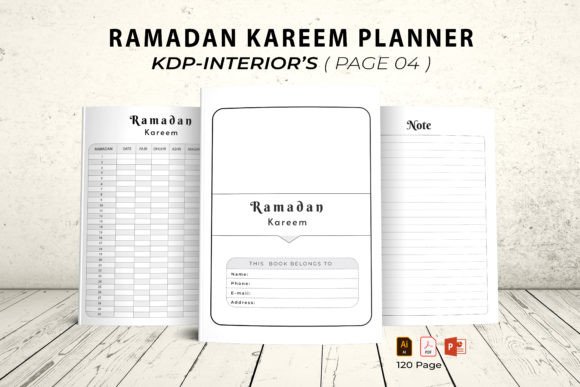
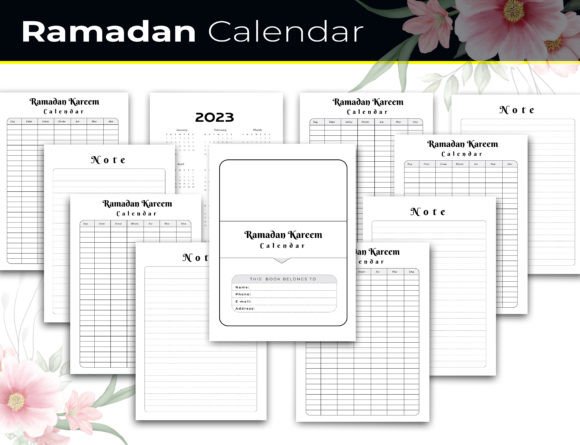
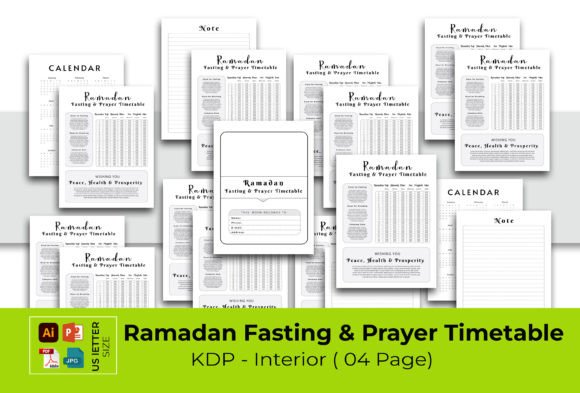
Unlike a pre-filled, static journal or a generic calendar, an editable planner like this one is provided as a digital file pack. Its core distinction is its adaptability. It includes source files in formats like Adobe Illustrator (AI/EPS), Microsoft PowerPoint (PPT), and JPEG, alongside a ready-to-print PDF. This means the user isn't just receiving a finished product; they are receiving a toolkit. The Editable Ramadan Fasting, Prayer Planner allows for changes to colors, text, layout, and graphics. The 100 vector shapes are resizable, and the entire document's 120 pages, including the 2023 calendar and cover, can be modified to suit individual taste or need before any printing or uploading occurs.
This approach shifts the role from passive consumer to active co-creator. For someone with specific aesthetic preferences, or who wants to integrate personal reminders or local mosque timetables precisely, this editability is the primary value. It bridges the gap between a completely DIY design—which requires significant time and skill—and a rigid, off-the-shelf planner that may not fully align with one's practice.
Comparing Planning Approaches: From Analog to Digital
When considering how to manage Ramadan schedules, individuals typically evaluate a spectrum of options. Understanding where the editable planner sits within this spectrum helps clarify its best-fit scenarios.
Traditional Methods and Static Planners
Many people use simple tools: a wall calendar, a notebook, or a dedicated but non-editable printable PDF. These are straightforward and require no technical skill. Their limitation is inflexibility. If prayer times from a local authority need to be entered, one must write them manually. Color schemes and section layouts are fixed. For those who prefer minimal setup and have no desire for customization, these simpler options are often sufficient and less time-consuming initially.
Digital Apps and Software
A growing category is dedicated Ramadan mobile apps or digital calendar integrations. These offer dynamic features like automatic prayer time calculations based on location, notifications, and digital tracking. Their strength is in automation and convenience, especially for tech-savvy users. However, they lack the tangible, reflective aspect of writing on paper and often don't provide a cohesive, printable record of the entire month. The Editable Ramadan Fasting Prayer Timetable Planner serves a different need: it is ultimately a printable document, but one that can be perfected digitally before it touches paper.
The Fully Editable Template: A Hybrid Solution
This planner occupies a hybrid space. It begins as a digital project file but results in a physical or printable planner. It doesn't automate calculations like an app, but it provides a structured canvas where manually researched timetables and personal goals can be neatly organized in a visually pleasing format. The tradeoff here is between time investment and personalization. Using the Illustrator or PowerPoint files requires some basic familiarity with those programs. The payoff is a completely tailored planner that matches one's exact requirements.
Evaluating the Strengths and Practical Use Cases
The strengths of the Editable Ramadan Fasting, Prayer Planner are clear for specific user profiles. Its high-quality 300 DPI resolution and print-ready file make it suitable for professional home printing or commercial print shop use. The inclusion of multiple file formats (AI, EPS, PPT, JPEG, PDF) offers flexibility depending on the user's software comfort level.
- For Content Creators and Community Leaders: An individual running a community group or a small business creating Ramadan resources might use this editable pack as a base template. They can easily insert their branding, adjust colors, and produce a unified planner for distribution to members or customers.
- For Design-Conscious Individuals: Someone who values aesthetic harmony in their spiritual tools and wants a planner that matches their decor or personal style would benefit from the ability to change colors and resize elements.
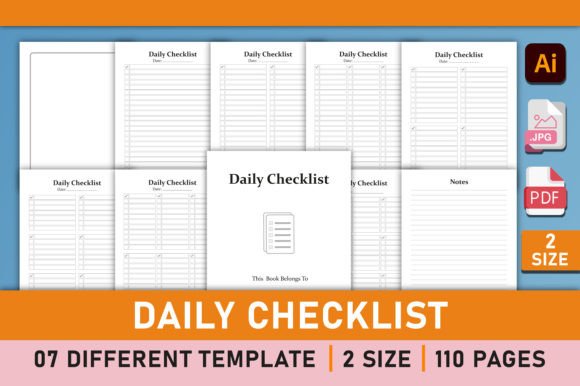
- For Those with Specific Logistical Needs: If a user follows a particular prayer time calculation method or wants to integrate unique daily sections (like water intake tracking during fasting, or specific charity logs), the editable format allows for these additions without compromising a clean layout.
Considering Limitations and Decision Factors
An editable template is not the optimal choice for everyone. Its primary limitation is the requirement for a degree of digital file editing competence. While PowerPoint is widely accessible, Illustrator is a professional vector editing software. Users without any experience with these programs may find the process daunting and might prefer the ready-to-use PDF or look for simpler alternatives.
A key decision factor is time. Ramadan preparation is often a busy period. Investing hours into learning software or customizing 120 pages may not be practical for someone with a demanding schedule. In such cases, a pre-formatted, non-editable planner that is still well-designed might be a more efficient selection.
Another consideration is final use. If the sole intention is to upload the file to a print-on-demand service like KDP (Kindle Direct Publishing) to sell, then the editable features are invaluable for creating a unique product. If the intention is purely personal use with immediate printing, the included JPEGs or PDF might suffice without editing.
When Is This Planner the Right Choice?
The Editable Ramadan Fasting Prayer Timetable Planner 2023 is likely the right choice when customization is a high priority and the user possesses—or is willing to acquire—the minimal technical skills to manipulate the files. It fits situations where:
- The desired outcome is a professionally printed, cohesive planner that reflects personal or brand identity.
- The user plans to reuse or adapt the template for future years, making the initial editing investment worthwhile.
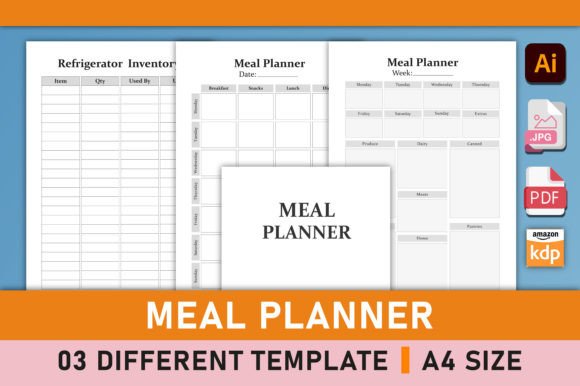
- There is a need to merge different types of information (prayer times, meal plans, reflection notes) into a single, beautifully formatted document that off-the-shelf products don't offer.
When Another Option Might Be Needed
Readers might consider another option if they seek maximum convenience with zero setup. Those who are less concerned with visual design and primarily need a functional tracking tool might find a dedicated app or a simpler printable PDF more effective. Similarly, if the requirement is for a shared family planner that is easy for all ages to understand and use, a less complex, pre-colored static version could prevent confusion.
Ultimately, selecting a Ramadan planning resource involves weighing the value of personalization against the effort required to achieve it. The editable planner package stands as a powerful solution for those who place high value on that personalization, offering a bridge between generic tools and a fully custom-designed one. It provides the structure to start and the freedom to finish, allowing each individual to create a planner that truly supports their unique journey through the sacred month.